Showing posts with label ocean. Show all posts

Wednesday, September 5, 2012

The Great Canadian Shoreline Cleanup


Every year, the Great Canadian Shoreline Cleanup is held in September all across Canada. Environmental groups, organizations, and individuals get together to clean up the shorelines in their communities, be it a harbour, a pond, or a beach. 

This year, I'm living in Vancouver and have joined two cleanups in my area. One taking place in English Bay, my favourite beach, and the other at Beaver Lake, where there really are Beavers!

Check out Shoreline Cleanup to see the map of all the cleanups that have been organized. You can join an existing one or even organize your own!


Monday, September 3, 2012

Squishy Sea Stars!


Sea Stars live on the ocean floor.             (Photo credit: Paul Shaffner)
Sea Stars are water-filled, squishy, and adorable animals! There are different kinds of Sea Stars, the most popular being the five-armed "Starfish". Starfish are not actually Fish, so I call them Sea Stars instead! Fish are animals that have backbones (and are called "vertebrates"), while Sea Stars don't have a backbone (and are called "invertebrates"). This means that Sea Stars are very soft!


I'm holding a Sun Star!                      (Photo credit: N. Collins)

This is a purple Sun Star that I worked with at the Ocean Sciences Center in Logy Bay, Newfoundland. Sun Stars have a lot of arms! The cool thing about Sea Stars is their ability to grow back any arms that get inured. So if you see a Sea Star with a tiny arm, that means it's slowly growing back to its normal size.


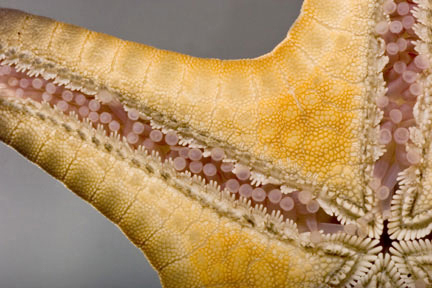
The underside of a Sea Star.              (Photo credit: Jaclyn Pisano)


Most Sea Stars eat other animals, like mussels or snails, through the mouth on the underside of their bodies. Some Sea Stars can also push their stomachs outside of their bodies to eat their prey!!

To walk, Sea Stars have tiny little, squishy "tube feet" that act like suction cups. These tube feet are organized in lines on the underside of each arm.

Sun Star eating!         Salt Spring Island        


When Sea Stars eat, their bodies get poofy in the middle! This means that they've surrounded their food and are having a great snack. 

Some Sea Stars keep their eggs inside of them, which can also make their bodies look poofy. Although, most Sea Stars let their eggs float off into the ocean!

Friday, January 27, 2012

The Squishy Sea Cucumber!

Have you ever heard of a Sea Cucumber before? If not, then you might be surprised at how cute and cool this animal is, even though at first it seems to just be a stationary log! I first learned about Sea Cucumbers when I studied Invertebrates (a.k.a. animals without backbones) at university. Then, in the Summer of 2010 I started working at the Ocean Sciences Centre as an Interpreter of a touch tank, which means that I taught people about local ocean animals through a live display.


A sample of the cool animals in the touch tank
The animals were collected from the shore around the Ocean Sciences Centre, and then returned to the ocean in September, when the touch tank was put away until the following Summer. It was really fun to work at the touch tank, although the water was really cold, so sometimes my hands would go red and numb if I played with the animals too much!


Coral, Sea Cucumber, and Sea Stars

In the middle of this photo is a Sea Cucumber (the long, black, cylinder shaped animal). Without meeting this animal, it's hard to tell what it is or how it survives, but once you get up close you discover some really cool features! First of all, Sea Cucumbers are really soft and squishy. They are filled with lots of water and can change their body shape really easily. For example, if a Sea Cucumber wanted to fit into a tiny hole in a rock, it could squish its body into a small, thin shape and fit through!


In this photo, you can see the underside of the Sea Cucumber and see how it has changed it shape and size. The orange lines or dots that you can see are its feet! They are tiny "tube" feet, which means they can suction onto objects, like rocks, to walk along the sea floor.

Sea Cucumbers have many ways of keeping predators away from them. Sometimes, when vistors to the touch tank picked up a Sea Cucumber, it would squirt out water to make itself look deflated and confuse them into thinking it was dead. Most people jumped in surprise and thought that the animal was peeing on them! Some Sea Cucumbers also have a deadly chemical that they can squirt out (sort of like squid!) to kill any animals trying to eat them.


To eat, these cute squishy animals have a ring of tentacles (sort of like fingers) around their heads. These tentacles are sticky and sometimes a Sea Cucumber will point them up in the water and catch little bits of food that float by. They also like digging in the sand to find little food pieces. Their mouth is in the middle of the ring of tentacles.

Sea Cucumbers can be all sorts of different colors and patterns, like this cool bright blue one. I worked with animals that were dark black, with grey bellies, and orange tube feet.


P.S.: I've added a whole bunch of updates in the past few weeks: links to cute and fun games, craft tutorials (i.e. origami animal bookmarks, jellyfish mobile, zoo-themed board game), and a brand new Video page. Click on the pages above!


Wednesday, December 14, 2011

Little, Tiny, Squishy Nudibranch!


How cool! (www.northislandexplorer.com)


These tiny marine animals are squishy and adorable. They are similar to sea slugs but not closely related. Nudibranchs are Mollusks, like Snails, Slugs, and Octopus, but have a few differences, such as their body symmetry. Their name is pronounced: nudie-brank and means "naked" + "gills".


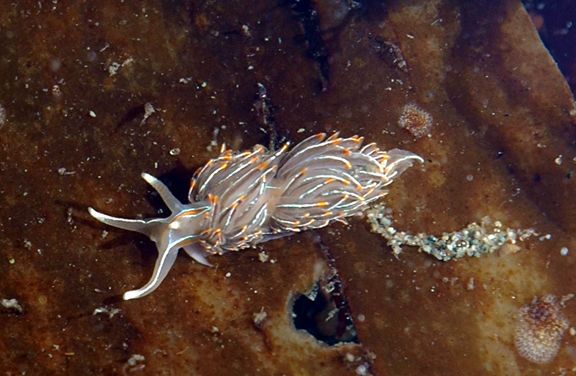
A little Nudibranch in Fulford Harbour.


I spotted these little white and orange Nudibranchs in Fulford Harbour (Salt Spring Island, B.C.). They were hanging out on a wooden wharf post, looking for their lunch. Nudibranchs eat other animals, such as Sponges and Anemones. These guys were only about 1.5 inches long, and their soft tentacle-like protrusions (called "cerata") wiggled in the water current. They were very beautiful to watch.


Nudibranchs can be very colorful and tiny:


Wednesday, August 17, 2011

Manta Rays!

Rays in general are amazing and beautiful creatures. Manta Rays in particular are the biggest of the Rays. They seem to glide effortlessly through the water, with graceful movements. Manta Rays are also very mysterious animals to us, because there are a lot of things that humans do not know about them.


cute and squishy!


beautiful markings on underside.


Manta Rays have unique patterns on their undersides; the colors are different depending on the area they are from. For example, Manta Rays from the eastern Pacific often have mostly black undersides, while Manta Rays from the western Pacific are usually white underneath.


Manta Rays are known to jump high out of the water! The meaning of these jumps is unknown, but possible reasons could be:


- communication with other rays
- mating ritual
- avoiding predators/disturbances
- they are just having fun!


Manta Rays nibble on plankton, krill, fish larvae, and other small organisms. They obtain their food through a filtering process as they swim. As the Manta Ray swims through the ocean, the water is filtered through its gills, trapping any particles.


Small fish often feed on parasites on the Manta Rays' skin. This is a mutualistic symbiotic relationship, where the small fish obtain food and the Manta Ray is cleaned of harmful parasites. 


Manta Rays also migrate to find food, although their exact route is unknown. 


Wednesday, March 16, 2011

The Adorable Sea Otter!

Fuzzy!

Sea Otters live mainly in water, as their name indicates, but they can walk on land too.

Sea otters do not have a thick layer of fat to keep them warm, like most marine mammals. Instead, they have a lot of really fuzzy fur! They spend a lot of time grooming their fur to make sure that cold water doesn't seep into between the hair and make them chilly!

Sea Otters even blow air in between their fur to dry it!


So much cuteness in one place!


While Sea Otters are not super sociable, they do like sleeping near each other. Sometimes they even hold paws to keep from drifting away!


This is a super cute video of a Sea Otter eating. They like to crunch into sea urchin, clams, mussels, and snails. Otters put a rock on their belly and smash their food against the rock to break open the shell!


Sleepy Sea Otter


Sea Otters take a lot of naps throughout the day. Sometimes they wrap a piece of kelp around their body to stay in one place while they sleep.


Baby Sea Otters!


Mommy Sea Otters groom their babies so much that their fur is super douper fluffy. They are so fluffy that the babies float on the water!

Saturday, February 19, 2011

The Leatherback Sea Turtle!

I hope you have not been waiting impatiently for my latest post. I've had a busy week in school! But if you have been waiting, then all that time will definitely be worth it to see this really cute Leatherback sea turtle!


Baby turtle crawling toward the ocean.


Sea turtle eggs are laid on a sandy beach. The mommy comes onto land and digs a deep hole in the sand with her back flippers. Then she lays a bunch of little eggs in the hole and covers it back up with sand.


When the sea turtles hatch they have to dig themselves out of the nest and crawl toward the sea. They usually crawl out of the sand at night, when the brightest light is over the ocean (the sunlight reflected off the moon). The babies just move toward the light and find the ocean!


Leatherback turtles can dive pretty deep underwater, up to 1000 meters!, but have to come to the surface to breathe air.


They are also considered the fastest moving reptile!


Carl Safina with a Leatherback Turtle.


Full grown Leatherback turtles are huge!

These turtles love to eat jellyfish so much that they don't eat anything else.


P.S: I changed my comment settings and now anyone can comment on my posts :)

Monday, February 14, 2011

Mola Mola (Ocean Sunfish)!

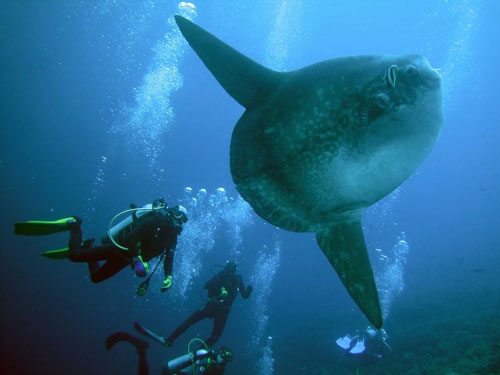
The Mola mola is a very bizzare and spectacular fish. Some other names for it are "swimming head" because they do not have tails, or ocean sunfish because they like "sun bathing" at the surface of the water.

Strange!


It looks like only half a fish and weighs a lot. Mola molas can be fairly big.


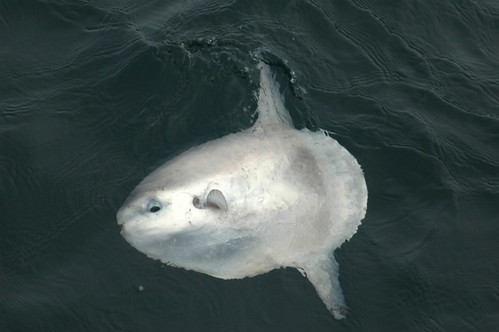
This is a Mola mola "sunbathing" at the surface of the water. He's soaking up some rays to warm up before he takes a dive into the chilly water. Mola molas like pretty warm water, at least in the double digits.


Ocean sunfish are into jellyfish as their main food source. The sunfish can also act like a plate so other fish and animals can eat little parasites from its body!
 
Mola molas can also jump really high out of the water! As much as three body lengths!

Thursday, February 3, 2011

Manatees! Yay!


Manatees are so strange and beautiful. They are big and squishy and have spatula shaped tails. Manatees are considered incapable of aggression!


Cute flipper.


They have cute flippers that they can use to cuddle or hold food, like seagrass. Seagrass is their favorite snack.

    
Mommy manatee cuddles baby manatee


Manatees only like swimming, cuddling, and living in warm water, like in the cozy ocean surrounding Florida.


num num num


This is a fantastic picture of a manatee eating
nummy seagrass that I have hanging
in my bedroom.


Snailia holding knitted manatees.

Tuesday, February 1, 2011

The amazingly cute and cool Axolotl!


My favorite kind of axolotl are the leucistic and albino colored. These salamanders are light pink in color with black or pink eyes.

Most salamanders go through metamorphosis, but not axolotls! They keep their gills and stay living in the water.


Axolotls use their sense of smell to find worms, little fishies, and bugs to nibble on.

These cute animals can live to be about 10 to 15 years old.

Sadly they are "critically endangered" due to habitat destruction. :(

LinkWithin

Related Posts Plugin for WordPress, Blogger...