Showing posts with label invertebrate. Show all posts

Wednesday, February 1, 2012

One Year of Snailia!

I started this cute and fuzzy blog on January 31st, 2011, so now, after a full year of adorable and interesting critters, Snailia is entering into its second year! I have a very special post to celebrate my favoritest animals ever:

SNAILS!!
The spectacularly gooey, the fantastically beautiful, the wonderfully smart, SNAIL!


http://www.applesnail.net/
I fell in love with Snails many years ago, at first fascinated by their beautiful spiral shells. Snails are born with their shells and never leave them. Their shell is their home and it grows with them. The rings on the shell can't be counted to figure out the age, like you can do with a tree, but these rings do form spectacular patterns. From the lines on the shell you can understand the kind of conditions a Snail lived in. The shell coils as it grows and forms a spiral shape. Snails are very soft and squishy and can hide in their shells if they feel threatened by predators or bad weather, for example, or maybe they just want to spend some time alone. Sometimes I like to go inside my snail shell if something scares me, because shells are protective.


I'm petting a Giant African Land Snail!

I also love Snails because of their super cool tentacles. A lot of land Snails have four tentacles on their head: two "eyestalks" with little eyes on top, and two smelling tentacles. These tentacles are retractable, meaning the Snail can pull them inside its head!

Snails move around using the muscles in their "foot", which is the underside of their long, squishy body. They also have tiny little hairs, called cilia, on their foot, which help them move and also feel things as they go along. 


He doesn't even get hurt!
Snails are also pretty gooey and slimey, 'cause they produce mucus that covers their bodies. This keeps them moist, because Snails hate being dry, and also helps them crawl around and not get hurt. Some Snails can even crawl over sharp objects and not get injured!

These super cute creatures leave a shiny trail of slime behind them. Sometimes, after a rainfall, you can find these tracks on sidewalks and fences, and see what the Snails have been up to.


Working with Giant African Snails in 2009.


A lot of land Snails eat plants, such as leaves and fruit, and some also eat other animals. Either way, these gooey animals need calcium in their diet to keep their shell strong (kind of like us humans need calcium to make our bones healthy). I've worked with a few different species of Snails, such as Giant African Land Snails, Moon Snails (who live in the ocean), and Dog Whelks (who also live in the ocean), and they all have different cool features.


A Snail party.


The Giant African Land Snails are exactly what their name suggests: Giant! They really like to eat fruit and a lot of people like to keep them as pets. Many countries no longer allow these Snails to be brought in, in fear that these big creatures will eat a lot of the local plants and animals. Some people even consider them "pests", but I would love to have a hundred of these Snails hanging out in my backyard!


Me holding a Moon Snail in Summer 2010.

The Moon Snail is another big Snail, but this one lives in the ocean. Moon Snails eat other shelled animals, such as Mussels, by puncturing a hole in the shell. These big gooey animals like to burrow in the sand to hide and find food.


Dog Whelks are also Snails that live in the ocean, but these guys prefer to live on rocks,
instead of sand. They have long, pointy shells, and the kind I worked with had spotted bodies. They also eat other animals through a long tube called a "proboscis", which is just like a straw that we use for drinking. 


Snails are my favorite animal for a lot of reasons, more than just the ones I've shared above. So when our Snail friends appear again in the Spring and Summer (they hibernate in the colder seasons!) please be careful of where you step, and avoid crushing these super adorable animals. A Snail with a broken shell cannot survive, although it can repair a small crack.
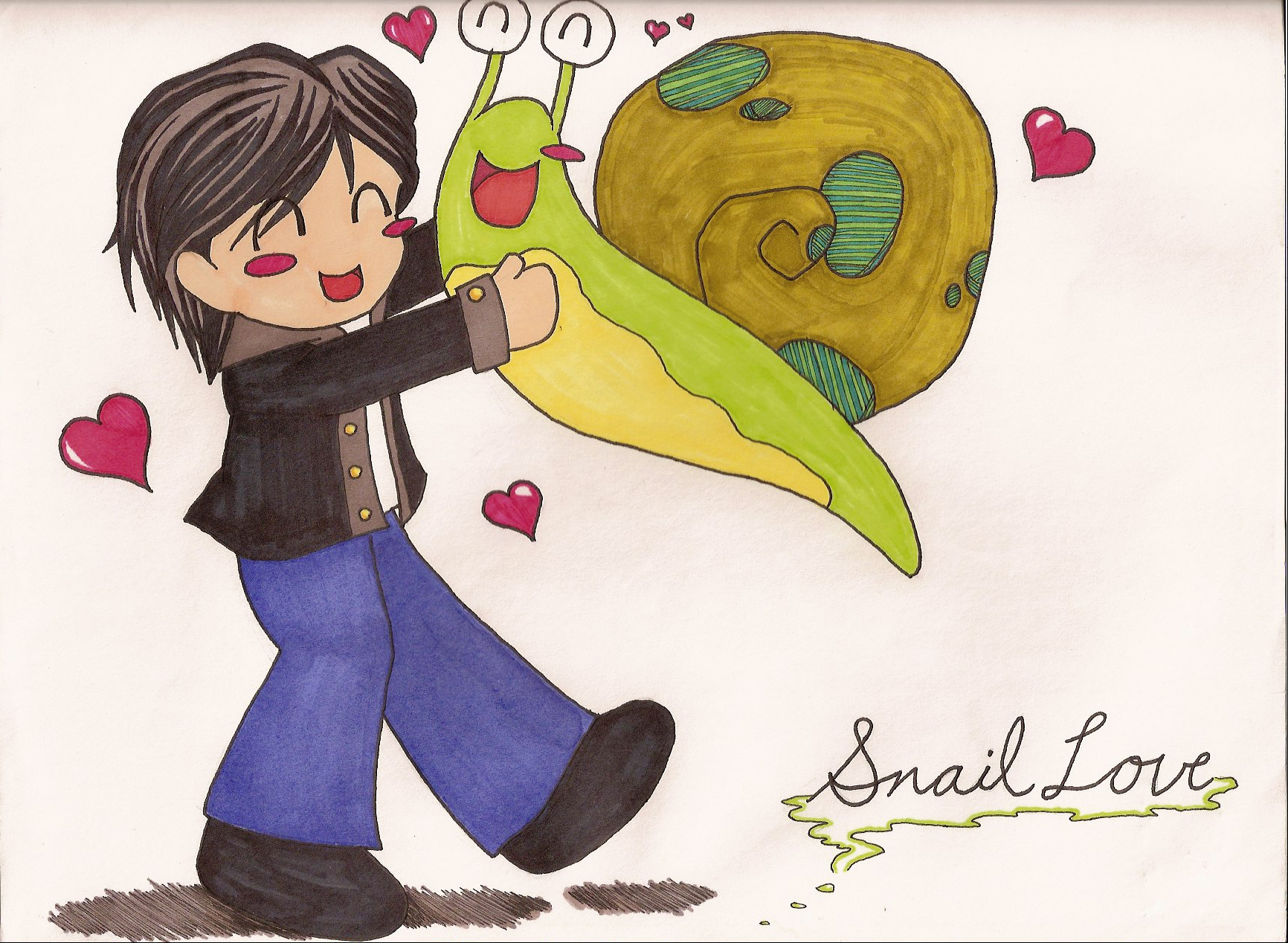
Check out: http://nicaranime.deviantart.com/

Friday, January 27, 2012

The Squishy Sea Cucumber!

Have you ever heard of a Sea Cucumber before? If not, then you might be surprised at how cute and cool this animal is, even though at first it seems to just be a stationary log! I first learned about Sea Cucumbers when I studied Invertebrates (a.k.a. animals without backbones) at university. Then, in the Summer of 2010 I started working at the Ocean Sciences Centre as an Interpreter of a touch tank, which means that I taught people about local ocean animals through a live display.


A sample of the cool animals in the touch tank
The animals were collected from the shore around the Ocean Sciences Centre, and then returned to the ocean in September, when the touch tank was put away until the following Summer. It was really fun to work at the touch tank, although the water was really cold, so sometimes my hands would go red and numb if I played with the animals too much!


Coral, Sea Cucumber, and Sea Stars

In the middle of this photo is a Sea Cucumber (the long, black, cylinder shaped animal). Without meeting this animal, it's hard to tell what it is or how it survives, but once you get up close you discover some really cool features! First of all, Sea Cucumbers are really soft and squishy. They are filled with lots of water and can change their body shape really easily. For example, if a Sea Cucumber wanted to fit into a tiny hole in a rock, it could squish its body into a small, thin shape and fit through!


In this photo, you can see the underside of the Sea Cucumber and see how it has changed it shape and size. The orange lines or dots that you can see are its feet! They are tiny "tube" feet, which means they can suction onto objects, like rocks, to walk along the sea floor.

Sea Cucumbers have many ways of keeping predators away from them. Sometimes, when vistors to the touch tank picked up a Sea Cucumber, it would squirt out water to make itself look deflated and confuse them into thinking it was dead. Most people jumped in surprise and thought that the animal was peeing on them! Some Sea Cucumbers also have a deadly chemical that they can squirt out (sort of like squid!) to kill any animals trying to eat them.


To eat, these cute squishy animals have a ring of tentacles (sort of like fingers) around their heads. These tentacles are sticky and sometimes a Sea Cucumber will point them up in the water and catch little bits of food that float by. They also like digging in the sand to find little food pieces. Their mouth is in the middle of the ring of tentacles.

Sea Cucumbers can be all sorts of different colors and patterns, like this cool bright blue one. I worked with animals that were dark black, with grey bellies, and orange tube feet.


P.S.: I've added a whole bunch of updates in the past few weeks: links to cute and fun games, craft tutorials (i.e. origami animal bookmarks, jellyfish mobile, zoo-themed board game), and a brand new Video page. Click on the pages above!


Wednesday, December 14, 2011

Little, Tiny, Squishy Nudibranch!


How cool! (www.northislandexplorer.com)


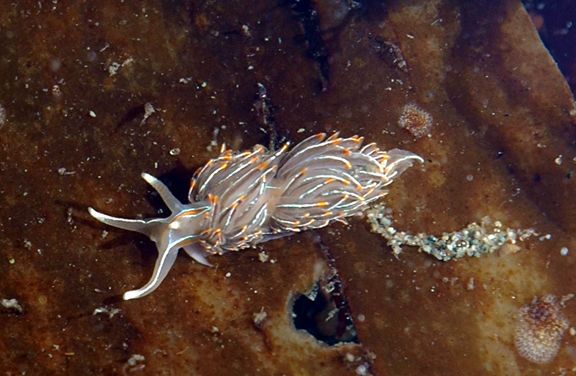
These tiny marine animals are squishy and adorable. They are similar to sea slugs but not closely related. Nudibranchs are Mollusks, like Snails, Slugs, and Octopus, but have a few differences, such as their body symmetry. Their name is pronounced: nudie-brank and means "naked" + "gills".


A little Nudibranch in Fulford Harbour.


I spotted these little white and orange Nudibranchs in Fulford Harbour (Salt Spring Island, B.C.). They were hanging out on a wooden wharf post, looking for their lunch. Nudibranchs eat other animals, such as Sponges and Anemones. These guys were only about 1.5 inches long, and their soft tentacle-like protrusions (called "cerata") wiggled in the water current. They were very beautiful to watch.


Nudibranchs can be very colorful and tiny:


Sunday, November 20, 2011

Woolly Bear Caterpillar!

 I have been living on Salt Spring Island for about three weeks now. Last week I went for a walk to explore the area and ended up waking on a trail in the forest. The trail goes all the way to the top of Reginald Hill, which overlooks Fulford Harbour.

Taken at the top of the hill.

On the way there I discovered a super cute and fuzzy little animal that excited me. I was taking photos along the way and managed to notice this little guy nestled amongst the grass blades.

Gasp! 


Sooo fuzzy!

This little caterpillar is called the Woolly Bear because it seems like they have furry bodies. It's not actually fur that's covering them and keeping them warm in the Winter, but hair-like bristles. I knelt down to get this close-up photo as the caterpillar checked out his surroundings. These caterpillars have this mass of fuzzy-like bristles because they live in cold places and live throughout the Winter. They have a special substance that keeps them from freezing entirely, although they are inactive during the Winter. Once the weather gets warmer in the Spring, these fuzzy caterpillars wake up from their hibernation-like nap and start doing one thing: eating! They spend the Spring, Summer, and Fall eating, eating, and eating some more. They eat all sorts of different plants and a few years ago National Geographic said that these smart insects will eat more of a medicine-like leaf that makes their sick tummies all better. The Woolly Bear Caterpillar has a sick tummy when flies lay eggs inside the caterpillar's bellies! But, after eating this special leaf (that is related to caffeine) the fly eggs are defeated! These caterpillars live for over a decade before turning into the Isabella Tiger Moth.

Sunday, August 14, 2011

Dragonfly!


Dragonflies are super cute insects. Because they are insects, they have 6 legs. They also have compound eyes, which means they have thousands of little eyes in one location. Dragonflies can detect movement very easily.


Dragonflies can fly really fast, up to 60 kilometers per hour! As they fly over ponds and lakes, they catch little bugs, like flies and mosquitoes, to eat. Dragonflies can also mate while flying!


Dragonflies have four beautiful wings. Today, while sunbathing next to a pond, a dragonfly landed on me! I could feel its little wings against my skin. A few years ago, a dragonfly landed on me while eating a bug!

Saturday, June 11, 2011

Roly Polies!

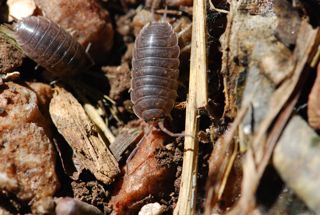
I called them "Carpenters" as a kid, but "Roly Polies" is way cuter. Their latin name is Armadillidium, because they look like little Armadillos. The most common name is "Pill Bug", but they are not actually bugs! They are crustaceans, like shrimp or lobsters. Most crustaceans live in water, and even though these tiny little guys live on land, they like keeping moist too. They live in damp and dark places.


Cute and Tiny!


Roly Polies are not insects for a few reasons:

1. They have seven pairs of legs (bugs have three pairs)

2. They have more than three body segments

3. No waxy covering on their bodies


These cute animals like to munch on bark, algae, and plants, especially decaying ones, like leaves that have fallen off a plant. They help break down plants into small pieces and into nutrients for the plants to use. This means they recycle the dead plants into food!


More cool facts about Roly Polies:
        • They don't pee!
      • They breathe through gills
      • Their blood is blue
      • They roll into a ball when poked!

LinkWithin

Related Posts Plugin for WordPress, Blogger...